 Vintro Pro
NL · FR · EN
Vintro Pro
NL · FR · EN
Small pieces, large amounts. Vintro Pro keeps the weight, the fineness, the purchase price and the provenance for every piece — and prints a label that fits on a ring.
With a piece of jewellery the value is in the detail: the fineness, the weight, the stone and where it came from.
Anyone selling second-hand and vintage jewellery often buys from private people: an estate, an old ring, a watch that has been sitting in a drawer. Each of those pieces has its own purchase price, and often no purchase invoice — only your own record of the purchase.
That is exactly why the record has to be right. The purchase is the starting point of your margin and of your register, and a piece you buy today you may not sell for another two years.
Weight, fineness, stones, size and condition, with close-up photographs. The purchase price and who you bought from sit beside them.
Print to a Zebra or a portable bluetooth printer, in the small format that hangs on a ring or a chain tag, with a QR code that points to the full record.
If you buy from a private person there is no purchase invoice. Your own record of the purchase is then the document your margin rests on — see the margin scheme and your register.
The total purchase value of what is in the cabinet, per category. Usable for your insurer and for your year-end stock.
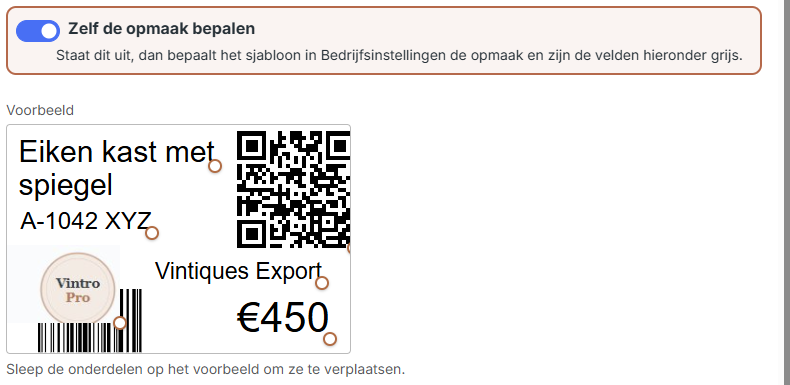
In the app: weight is its own field on the record, next to the purchase price and the purchase record. That keeps the basis of your margin with the piece itself.
The weight is only on a scrap of paperWith precious metal the weight is half the story. What is not on the record has to be weighed again.
The purchase from a private seller is recorded nowhereWithout a record of the purchase you cannot show your margin when you are checked. And your margin is exactly what you pay VAT on.
Everything is in the safe, with no listAfter a theft or a fire, a list with photographs and purchase prices is the only thing your insurer can work with.
Separate obligations exist for buying precious metal and for identifying the seller, and they differ from country to country. Check them with the competent authority in your own country or put them to your accountant — the knowledge base covers the VAT side, not precious-metal legislation.
30 days free, no card number. You put your own pieces in and see for yourself whether it fits, before you pay anything.
After that it is €19.99 per month excluding VAT, per business — with an unlimited number of pieces and an unlimited number of colleagues. The full pricing page.
Yes. Weight is its own field on the record, and the extended fields are set per business: you switch on what you need and leave the rest out.
Yes. Labels are printed on a label or receipt printer, and the smallest format is meant for small pieces. The QR code points to the full record, so not everything has to fit on the label itself.
30 days free, no card number, with every feature. After that it is 19.99 euro per month excluding VAT per business, with an unlimited number of pieces and colleagues.
There is a page for every kind of business. They describe the same app, but from the work that you actually do.
Entering ten pieces takes a quarter of an hour, and the first 30 days are free, no card number.
Rather talk it through first? That is fine too — we answer ourselves.